 5-minute briefs
The 'AI Debt Fear' Explained: CoreWeave's Plunge and the AI Bubble Debate
#AI#CoreWeave#Oracle#corporate bonds
What happened
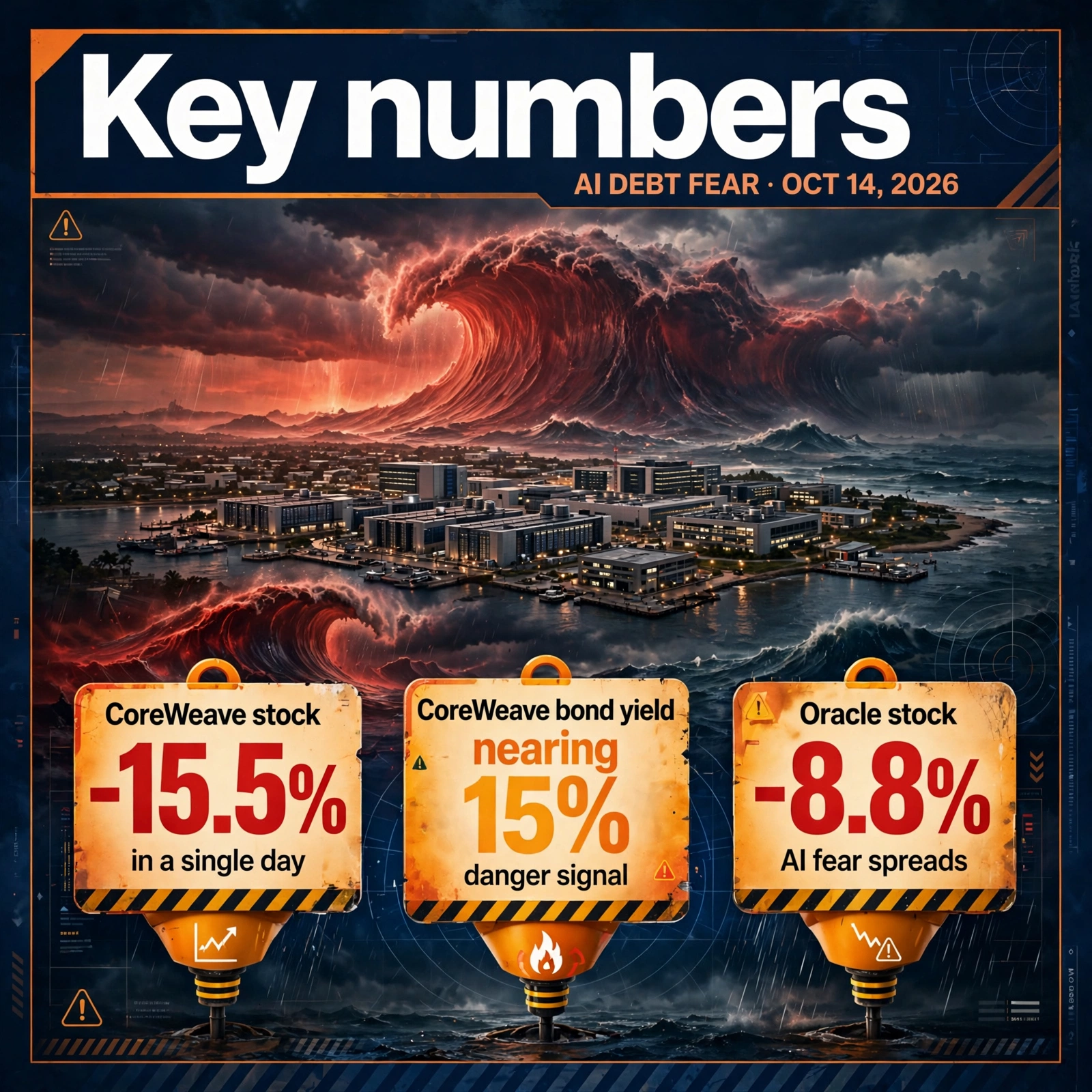
On October 14, shares of CoreWeave, an AI cloud company, plunged 15.5% — wiping out nearly a sixth of its market value in one session.
At the same time, yields on CoreWeave’s corporate bonds neared 15%. When a company’s bond yield climbs that high, it’s the market seriously doubting the company can repay its debt.
The fear didn’t stay contained. Oracle, which has been ramping up AI infrastructure spending, fell 8.8% as “AI debt” doubts spread to big tech.
Two sparks lit the fire: researcher Gartner warned that up to 80% of neoclouds could vanish by 2030, and CoreWeave’s bond yields had crossed 15% the day before. The hot September CPI then poured fuel on rate fears.
| Stock / indicator | October 14 move |
|---|---|
| CoreWeave (CRWV) | -15.5% |
| CoreWeave bond yields | neared 15% |
| Oracle | -8.8% |
| S&P 500 | -1.1% (7,718.94) |
| Nasdaq | -1.88% (26,692.87) |
How the “debt fear” works
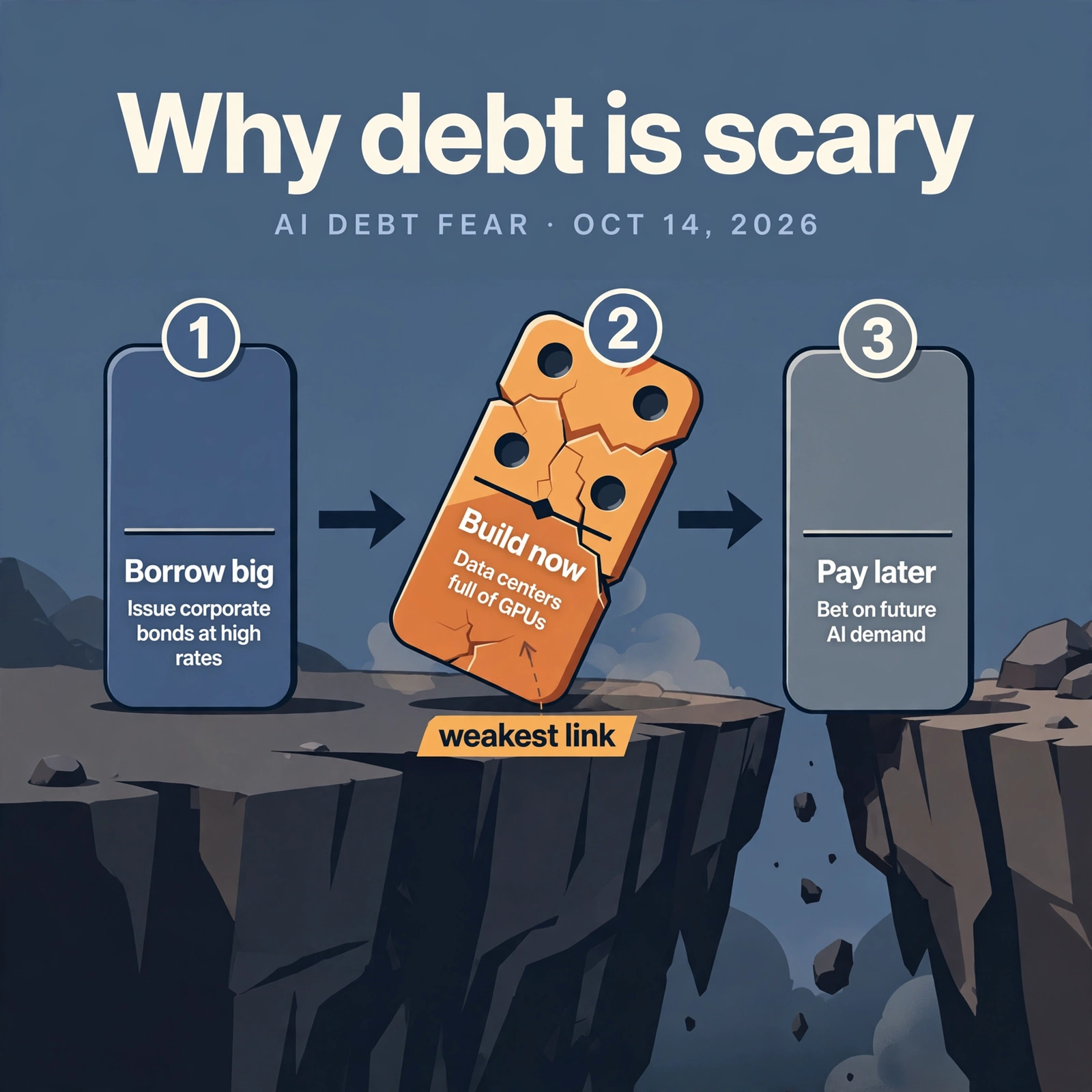
To understand the fear, start with how AI data centers get built. It’s simple:
First, companies borrow by issuing corporate bonds. One data center costs hundreds of millions of dollars, and each AI chip (GPU) inside costs tens of thousands. Equity alone can’t cover it, so debt fills the gap.
Second, the borrowed money builds data centers packed with AI chips. AI clouds like CoreWeave rent this capacity to corporate customers for a fee.
Third, the plan is to repay the debt with future AI demand. The bet: “AI demand will keep exploding, so today’s data centers will fill up and the debt gets repaid.”
The problem: both links in that chain are wobbling at once. September CPI surprised to the upside (+3.7%), reviving rate-hike fears that raise borrowing costs, while doubts grow about whether AI demand will really be that big. The debt stays the same while confidence in repaying it shakes — that’s the “debt fear” in a nutshell.
- Corporate bond yield: the interest rate on a company's bonds. When markets judge the debt risky, the yield rises. 15% is very high.
- AI cloud: a business renting out AI-compute data centers. CoreWeave is a leading example.
- Capex: money spent on facilities and equipment. The engine of the AI boom — but debt-funded capex carries rate risk.
Both sides
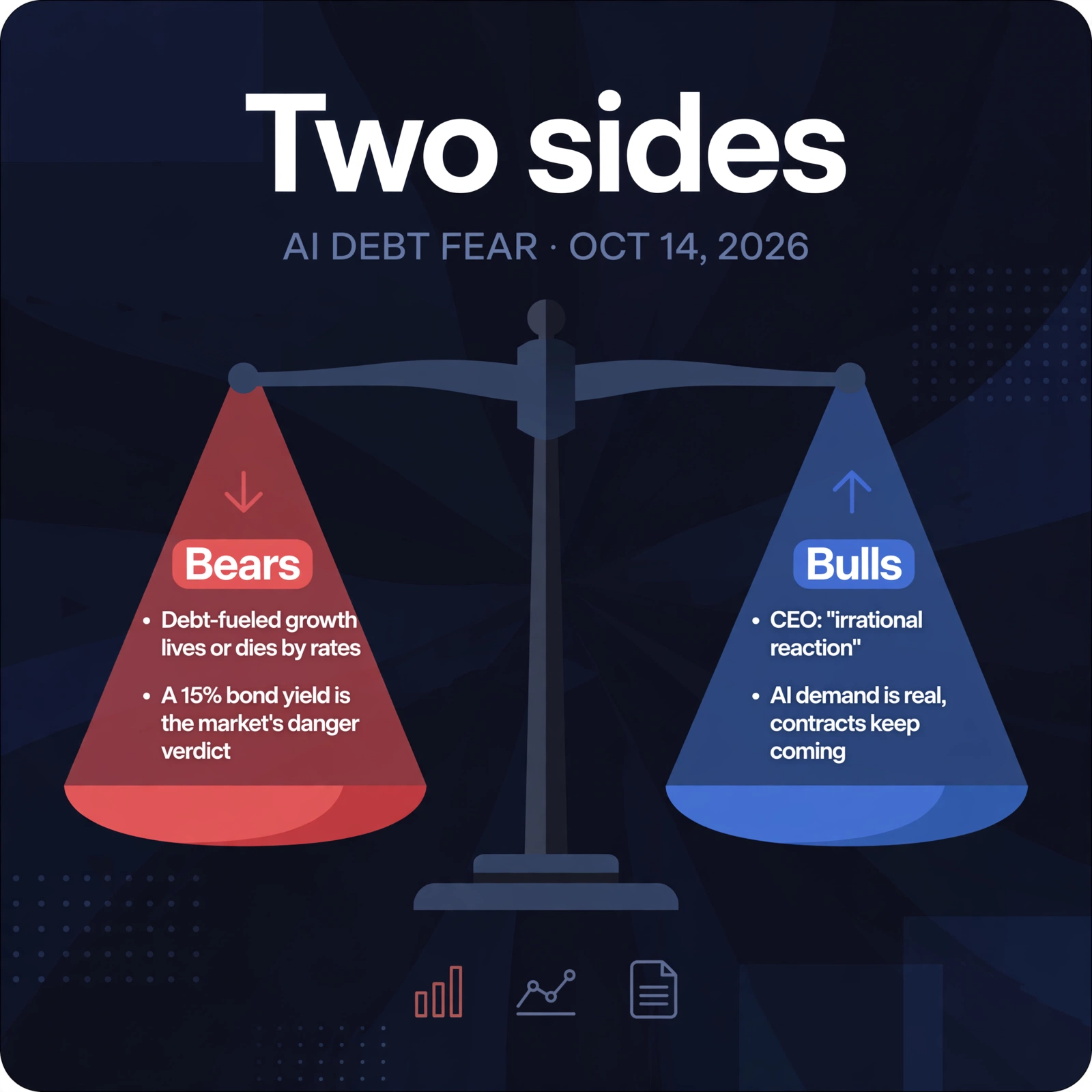
The skeptics’ case goes like this: debt-funded growth lives or dies on interest rates. If rates rise, interest bills balloon; if AI demand disappoints, data centers sit empty with the debt still on the books. A 15% bond yield is the market already flashing “danger”, they argue.
The pushback is not weak either. CoreWeave CEO Mike Intrator called the reaction “irrational” (in an internal memo reported by Bloomberg). AI demand is real and contracts are stacking up, he argues. With AI chip shortages still making headlines, demand isn’t pure fiction either.
Nobody knows who’s right yet. What’s clear: markets now look at AI companies’ debt as closely as their growth.
What to watch
Three checkpoints:
- CoreWeave earnings and guidance — whether its contract backlog and outlook can calm the debt fear
- Bond yield trend — a retreat from the 15% zone would signal returning confidence
- Big Tech capex commentary — whether the biggest AI spenders keep their investment plans
Not investment advice. Figures verified against Bloomberg and Gartner reporting and market data as of October 14, 2026.